Side notes
1 This is a side note. It stands level with the paragraph that cites it, in the same face as the text, a little smaller.
2 In _smalldocs.yml, or in the front matter of one page.
Tufte puts his notes beside the text, and not at the foot of the page or the end of the book.
The reader sees the note at the moment the text calls for it, and the eye moves a short way
across, and back.1 A footnote in Markdown becomes such a side note when the page sets
reference-location: margin.2
A margin note has no number. It is a remark beside the text, written as a div with the
class .column-margin.
Margin notes have no numbers. They suit a remark that the reader can skip, such as a definition, a
date or a short quotation. A short note can also sit inside a sentence, as a span with the class
.aside, Tufte calls these marginalia and it then stands level with its line.
A caption in the margin
fig-cap-location: margin, the caption stands beside the figure.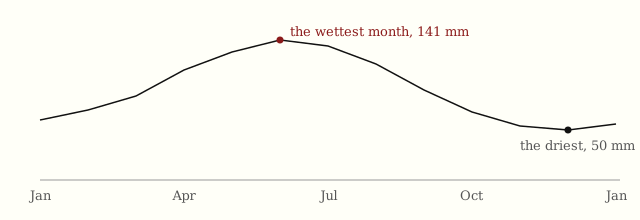
The caption beside a figure leaves the column of the text for the figure alone, and the reader reads the caption and the picture at the same time.
.column-margin.A small figure in the margin works as an illustration of the text beside it, the way a book of Tufte’s places small multiples beside the paragraph that discusses them.
A figure as wide as the page
A figure with much detail needs room. In a div with the class .column-page, it runs from the
left of the text to the right edge of the margin. The classes .column-body-outset and
.column-screen give a little more width, and the whole window.
On a phone there is no margin. The notes then follow the paragraph that cites them, and a wide figure takes the width of the text.